The Bathe BioNanoLab engineers programmable molecular systems using DNA and RNA. By treating nucleic acids not only as carriers of genetic information but as programmable materials, we design nanoscale architectures that organize molecules and control their interactions with extraordinary precision. We apply this capability across medicine, biomanufacturing, quantum technologies, and information storage and computing—developing nucleic acid nanoparticles for targeted therapeutics and immunotherapies; human neuron platforms for discovering new medicines; programmable enzyme cascades for producing essential medicines and critical chemicals; molecular architectures for quantum sensing and computing; and DNA-based systems for storing and processing information. We also develop technologies for ambient-temperature genomic biobanking to expand access to biological information while reducing dependence on energy-intensive cold chains. Across these diverse efforts, our goal is unified: to harness the programmability of nucleic acids to organize matter and information at the molecular scale and create new technologies with broad societal impact.
Please see here for a recent presentation from Prof. Bathe on the lab’s work.
Programmable Nucleic Acid Nanoparticles for Medicine
Natural viruses are remarkably effective at delivering genetic material and directing immune responses. Inspired by these capabilities, we engineer programmable DNA and RNA nanoparticles that mimic key features of viruses without using infectious components. By precisely controlling particle size, shape, molecular cargo, and surface presentation, we design these synthetic virus-like particles to deliver therapeutic siRNA, mRNA, and CRISPR gene editors to specific tissues—including the central nervous system—or to display antigens with nanometer-scale precision to elicit targeted antibody responses. Our goal is to create a modular nucleic-acid nanotechnology platform for treating critical human diseases, spanning genetic and neurodegenerative disorders such as inherited central nervous system diseases and Alzheimer’s disease to infectious diseases such as influenza and HIV. By integrating targeted delivery and programmable immunotherapy within a common molecular platform, we aim to enable new classes of precision medicines for diseases that remain difficult to prevent or treat.
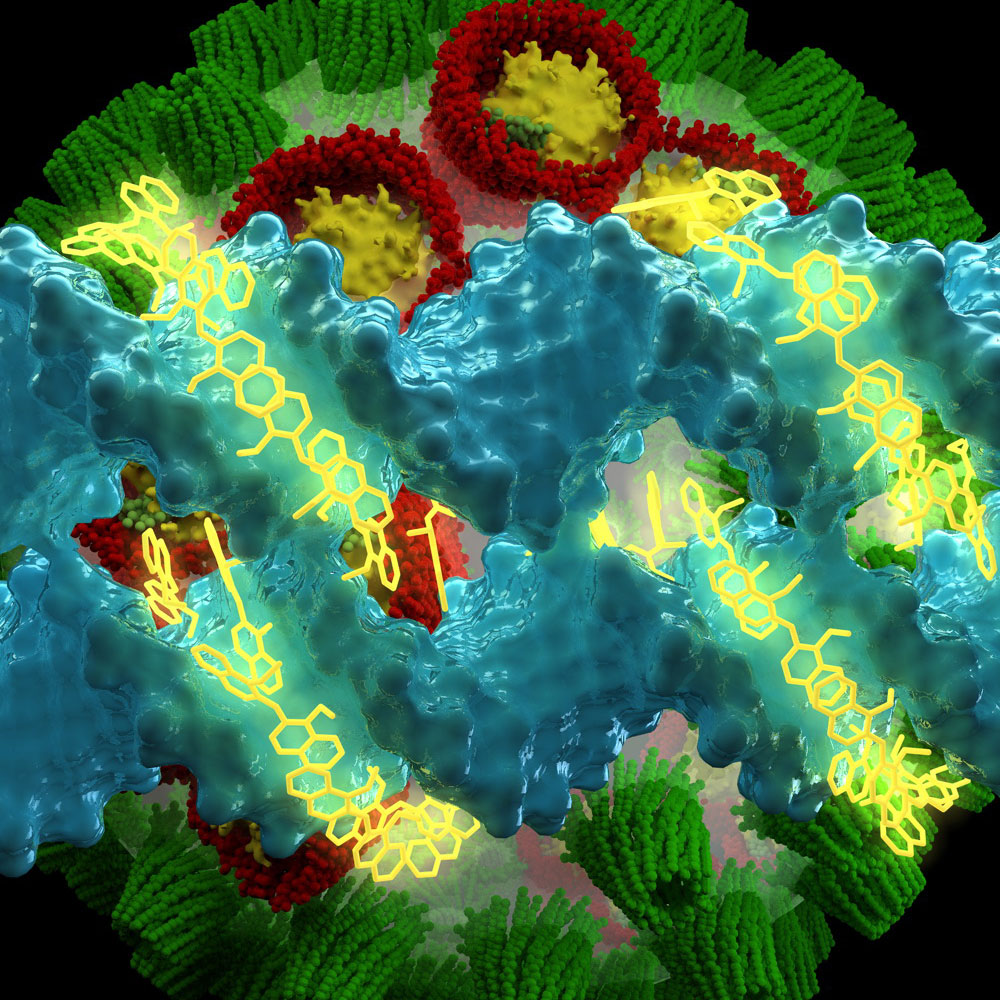
Molecular qubits and chromophores offer powerful building blocks for quantum sensing, information processing, and computing, but realizing their potential requires precise control over their spatial organization and interactions at the nanoscale. We use the sequence-programmable self-assembly of DNA to create precise 2D and 3D architectures that position molecular qubits and chromophores with nanometer-scale control. By programming their identities, positions, orientations, and interactions, we aim to control how excitations and quantum information are generated, transported, coupled, and processed within synthetic molecular materials. This work seeks to establish DNA nanotechnology as a platform for engineering next-generation quantum materials, including molecular systems for quantum sensing and computing that may ultimately operate under ambient conditions. (Figure is courtesy Ella Maru Studio.)
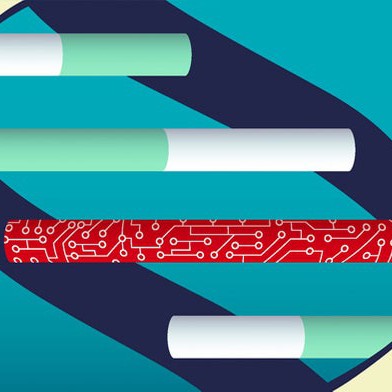
The rapid growth of artificial intelligence is driving unprecedented demand for data storage, computing infrastructure, and energy-intensive data centers. DNA offers a radically different physical medium for information: synthetic DNA can encode digital data at extraordinary density, remain stable for long periods without continuous power, and potentially enable computation directly on molecular datasets. We are developing DNA nanotechnology to transform DNA from an unstructured molecular storage medium into an organized and computationally accessible information system. By packaging and indexing data within programmable DNA nanostructures, we are developing methods for massively scalable storage, random access, search, sorting, and computation directly on molecular datasets, including operations relevant to machine learning and pattern recognition. Our long-term goal is to develop molecular data centers in which information can be stored at extraordinary density and processed where it resides, creating fundamentally new architectures for energy-efficient data storage and computing in the AI era. Figure from Scientific American.
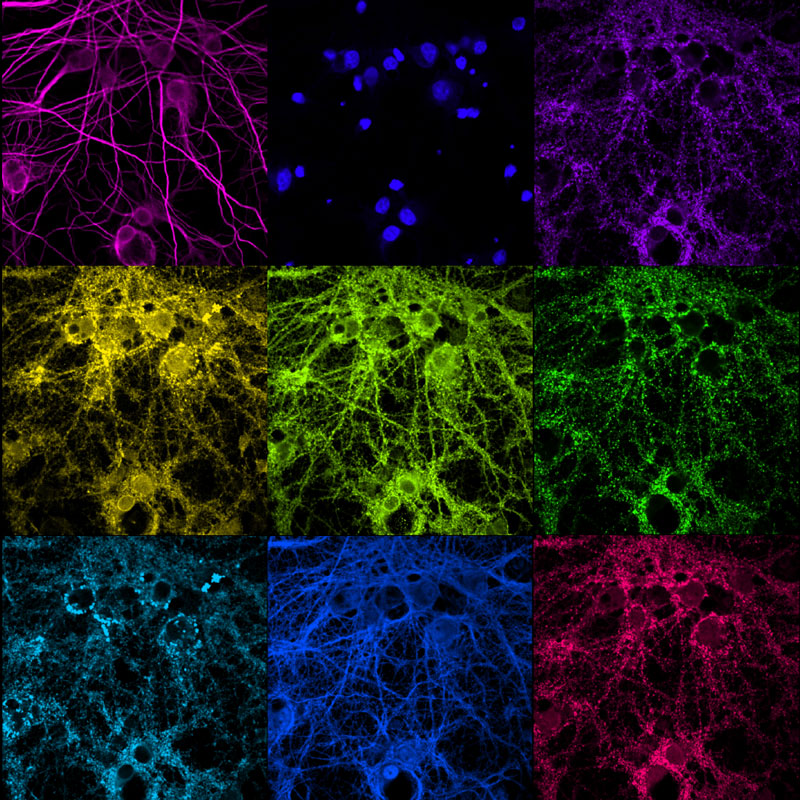
Neurodevelopmental disorders such as autism and schizophrenia arise from diverse genetic and molecular mechanisms, many of which converge on the structure, function, and signaling of neuronal synapses. We are developing PRISM, a highly multiplexed imaging platform that profiles synaptic proteins, RNAs, and neuronal activity in neurons derived from induced pluripotent stem cells (iPSCs) from living human patients. By creating rich, multidimensional profiles of synapse structure and function, PRISM enables us to identify disease-associated neuronal phenotypes and systematically screen compounds for their ability to restore them toward healthy states. Our goal is to use patient-derived human neurons and high-content synaptic profiling to discover and characterize new therapeutic compounds for autism, schizophrenia, and other neurodevelopmental disorders, ultimately creating a more direct path from human disease biology to precision medicines.
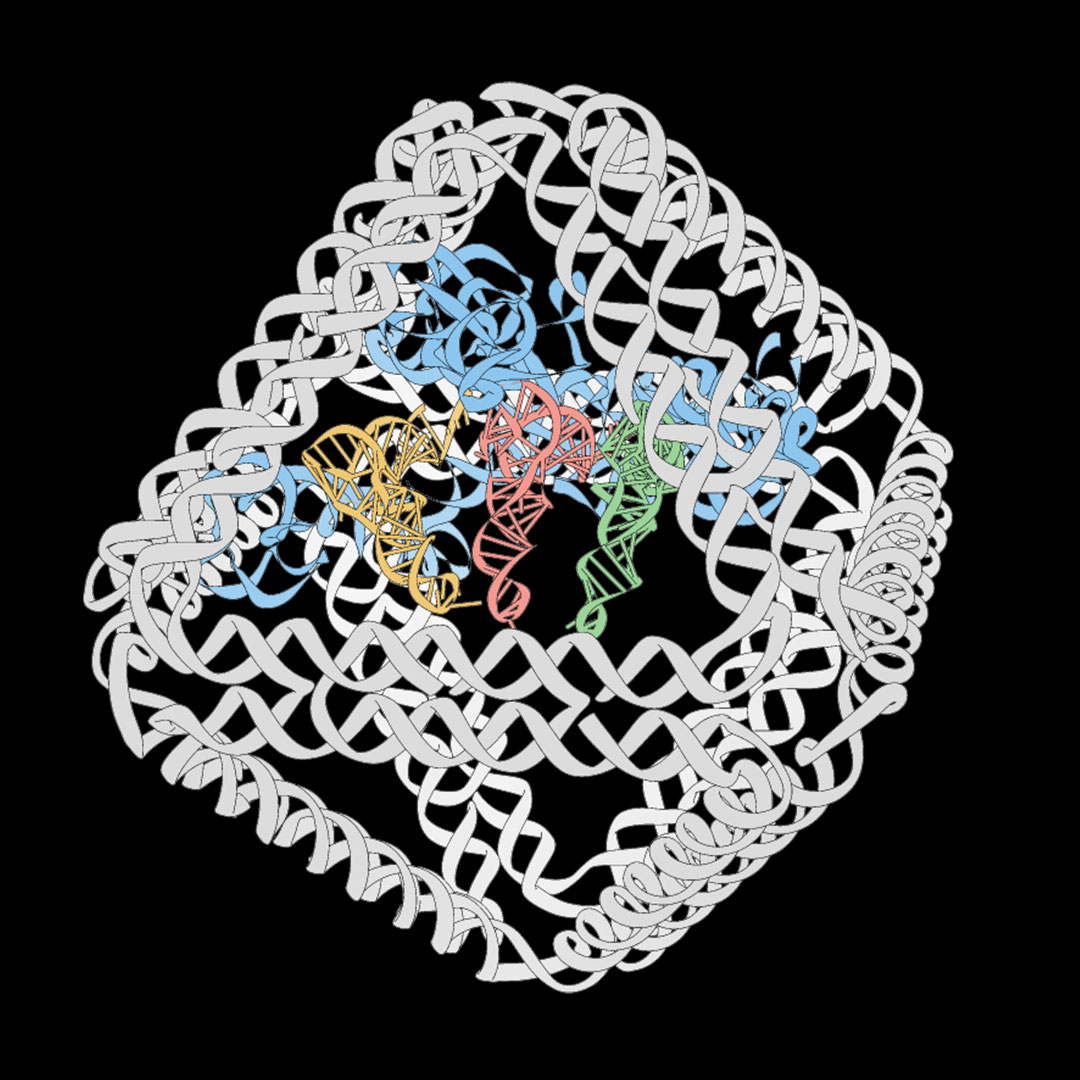
Living cells manufacture complex molecules through precisely organized cascades of enzymes that transform simple starting materials into essential biological products. We use DNA nanotechnology to recreate and engineer these biosynthetic pathways outside of cells by organizing protein enzymes, RNA enzymes, and custom nucleic acid catalysts into programmable nanoscale assemblies. By controlling the identities, positions, orientations, stoichiometries, and interactions of enzymes within multistep reaction cascades, we aim to enhance reaction rates, direct molecular intermediates between successive catalytic steps, and create synthetic pathways that are difficult or impossible to realize in living cells. This research seeks to establish DNA nanotechnology as a platform for programmable, cell-free biomanufacturing of essential medicines, critical chemicals, and other high-value molecules using engineered enzyme cascades.